From Survival to Scale: Why Africa Must Rethink Agriculture as Capital
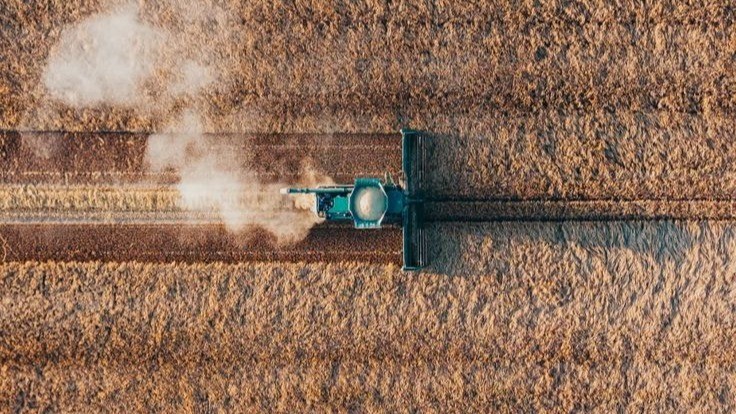
For too long, agriculture in Africa has been seen merely as a means of survival — a backup plan when all else fails, or a cultural inheritance reserved for the elderly in rural communities.
It is often viewed through the narrow lens of subsistence: tilling the soil to eat, not to scale; to survive, not to dominate.
But that very misunderstanding has crippled us — not just socially, but economically.
We are a continent of over 1.4 billion people, blessed with some of the world’s most favorable climate conditions.Yet we beg for aid and foreign support.
This same misconception has brought a continent of diverse cultural fortresses to its knees — and its children, sedated by narcotics and distracted by endless trend-chasing, now wander far from purpose.
If we do not pause and rethink, we may end up worse off than our ancestors — just as defenseless, just as unprepared — as many were in the 17th century.
It is glaring that we possess the strength, ingenuity, and will to keep the world on edge — searching with satellite and sniffer dogs for our next move.
And yet, it is an irony that our potential is so vivid to everyone... but us.
Now is the time to redirect our energy toward the betterment of our nations, to reclaim strength for our crippled economies, and to redeem our name on the global stage.
The ground beneath our endless stride holds more value than we care to admit.
Throughout history, agriculture has always been capital — the original form of wealth, the first asset class, and the foundation upon which civilizations were built and empires sustained.
AgriCapitalism is the urgent call to reclaim this truth..
In global economic powerhouses, agriculture isn’t treated as a hand-to-mouth endeavor. It is structured, invested in, mechanized, and optimized to generate not just food, but fortunes.
Land is leveraged. Value chains are maximized. Farmers are empowered as business owners, not pitied as dependents.
Africa must now confront a defining question:
Will we continue to treat agriculture as a relief strategy for the poor, or will we finally elevate it to the investment-grade asset it truly is?
The consequences of our answer are generational.
If we remain stuck in survival mode — where farming is informal, undercapitalized, and reactive — we will keep importing our future in bags of rice and containers of wheat.
But if we transition to AgriCapitalism, we begin to see land as leverage, crops as cashflow, and farmers as nation-builders.
The time to act is now.
The Economics of Survival — Why We’re Not Scaling
Across Africa, the dominant agricultural mindset is still rooted in survival — not scalability. Farmers cultivate just enough to eat, maybe sell a little, and repeat the cycle.
There is no room for expansion, zero collaboration, no reinvestment strategy, and no vision for domination of local or international markets.
Why?
Because survival economics discourages ambition. When the goal is to make it to the next harvest, innovation becomes a luxury. There's little room for risk, and zero appetite for long-term thinking.
We can no longer afford this mindset...
It is time for scale.
It is time for AgriCapitalism.
What We’re Missing — The Untapped Goldmine in Our Soil
Africa — and particularly Nigeria — is sitting on a vast agricultural treasure trove, yet we keep scratching the surface.
Most discussions around agriculture stop at planting and harvesting. But the real wealth lies beyond the farms — in value chains, agro-byproducts, and market gaps that we’re not even talking about.
Take maize for instance. Nigeria produces around 11 million metric tons annually, yet still imports over 500,000 metric tons to meet its local demand. But even beyond the grain itself lies an empire of underutilized opportunity.
Maize Stover (the leaves, stalks, cobs after harvest) can be processed into:
• Biofuels
• Livestock feed
• Organic compost
• Packaging materials
Yet it rots away in our fields.
Cassava Peels and starch waste can be turned into:
• Animal feed
• Industrial ethanol
• Biodegradable plastics
Rice Husks, Palm Kernel Shells, Groundnut Shells — all hold potential for:
• Energy briquettes
• Activated carbon
• Soil enhancers
But because our thinking begins and ends with survival, these high-value byproducts are left to waste.
And while this happens:
• We import wheat, even though sorghum and millet can substitute it in many processed foods.
• We import palm oil, despite once being a global leader in palm produce.
• We import dairy, yet graze cattle on thousands of hectares without milk-focused infrastructure.
We have what the rest of the world would kill for.
The resources others would fight wars for are ours by birthright — yet we remain beggars in a land of abundance.
The tragedy is that we are blind to the layers of wealth we’re leaving untapped.
It is time to think AgriCapitalism — wherever you are, however little you have to run with.
And when the journey is done, may history record that we did one thing right:
We found our bearing.
God bless Africa.
God bless her children.
God bless you — for daring to believe again.

Begin your first step toward AgriCapitalism with the right knowledge and resources today.

If this challenged your perspective, share this with someone who needs to read it. Let’s talk about the real strategies for building transgenerational wealth in Africa — not just theories.