The Real Wealth Hack for Agripreneurs: Pooling Power

How Nigerian Professionals Can Collaborate to Build Agro Empires Without Going Broke
What if I told you that the real wealth in agriculture isn’t buried in the soil alone — but in the synergy of minds that choose to till it, together?
Most Nigerian professionals today live in two parallel realities.
In one hand, we carry the dreams — passive income, financial freedom, legacy.
In the other, we carry the doubts — “Farming is capital intensive,” “I don’t have land,” “I’m not ready yet.”
And the truth is — we’re not wrong.
Agriculture — the kind that moves nations and builds empires — isn’t cheap.
Many of us dream of owning farmland, producing at scale, or exporting agro-products.
But for most, it remains just that — a dream.
The cost of acquiring land, setting up irrigation, investing in equipment, hiring skilled hands, and surviving through production cycles is overwhelming — especially for one person.
But maybe the real challenge isn't the cost of farming.
Maybe it’s the myth that we were ever meant to do it alone.
The Trap of Going Solo
Somewhere along the way, we adopted a dangerous script:
“If I can’t do it alone, I won’t do it at all.”
We glorified the solo grind. We made isolation look noble.
And in the process, we’ve watched time pass, opportunities fade, and fertile lands get swallowed by concrete — all because we believed that ownership must be individual to be meaningful.
But here’s something the Nigerian professional needs to remember:
Collaboration is not a weakness — it’s a wealth strategy.
It's shared risks!
Imagine this:
What if 10 professionals each committed ₦300,000 instead of waiting to raise ₦3 million alone?
That’s enough to:
• Acquire acres of fertile land
• Plant high-yield crops like plantain, okra, or pepper
• Hire skilled farm managers
• Partner with trusted agricultural estates for routine management
• Begin production within months — and position for long-term profitability
Together, that small seed could become a shared agricultural asset that outlives inflation and become a foundation for sustainable wealth creation.
The Power of Polling Resources
When we hear “agriculture,” we often imagine the lone farmer or an investor who’s already wealthy. What we rarely consider is the power of collaboration — pooling resources with other professionals like ourselves to build something far greater than we ever could alone.
This isn't just a theory — it's a proven business model.
• Cooperatives have existed for centuries, allowing small contributors to build big systems.
• Joint-venture agribusinesses are springing up across Africa, especially in countries like Kenya, Ghana, and Rwanda.
• In Nigeria, community farming schemes and land banking cooperatives are already gaining traction — from poultry to cassava to rice mills.
The wealthiest people don’t own 100% of everything. They own portions of many valuable assets — with well-structured agreements, clear responsibilities, and shared rewards.
The Advantage of Pooling Resources
1. It Lowers the Entry Barrier
Most people dream of owning land but can’t afford to cough up ₦2 million or more at once.
But ₦200,000 or ₦300,000? That’s a more realistic ask — especially when combined with others.
Pooling allows you to start now, not when everything is perfect.
2. It Spreads the Risk
Agriculture has seasons. And like every business, there are uncertainties.
But when 10 people invest together, the financial pressure doesn’t sit on one shoulder — it’s distributed.
One loss isn’t personal; it becomes a group lesson and a structured rebound.
3. It Multiplies Capacity
Instead of cultivating 1 plot on your own, you can manage 10 acres collectively.
You’re able to afford:
• Better equipment
• Experienced farm managers
• Premium seedlings and organic practices
• Post-harvest processing or packaging
Your reach and results expand — exponentially.
4. It Builds Real Networks (and Wealth Circles)
Pooling isn’t just financial — it’s social capital.
You build a circle of wealth-minded peers:
People who think long-term.
People who open doors.
People who invest beyond ego.
From that one agro-partnership, other ventures emerge — from logistics to exports to processing.
5. It Offers Dual ROI: Land + Production
When you pool funds into land for farming, you’re not just investing in crops — you’re owning the soil itself.
So even if a particular farming season underperforms, your land appreciates, and your equity grows.
• It’s a hedge against inflation.
• It’s a gateway to land-banking.
And it’s a soft but steady power base that many are sleeping on.
Pooling isn’t just for survival — it’s a quiet revolution. A strategic hack that levels the field and gives young people a seat at the ownership table — long before retirement.
Case Study: Thrive Agric – Nigeria’s Proof of Concept
In 2016, three young Nigerian entrepreneurs — Ayodeji Arikawe, Uka Eje, and other partners — launched Thrive Agric , a platform that connected smallholder farmers with everyday people who wanted to invest in agriculture.
But the magic wasn’t just in their technology — it was in pooling power.
They built a system where:
• Professionals across Nigeria could invest small amounts (₦10,000 – ₦1,000,000)
• Those funds would go directly into real farming operations
• Profits were shared with the contributors, while farmers got inputs, training, and guaranteed offtake
In less than 5 years, over 19,000 farmers were empowered, and the platform raised over ₦20 billion in funding from individuals and institutions — not by wealthy elites, but by everyday Nigerians pooling resources.
That’s not just a startup success — it’s evidence that collective action works.
Key Lessons from Thrive Agric:
• Pooling made agro-investing accessible to salaried workers, entrepreneurs, and even students
• Structured partnerships built trust and reduced risk
• Small contributions, when combined, funded real, scalable agribusiness
The model wasn’t perfect — like many businesses, they faced challenges in 2020 during the pandemic — but their early-stage success validated one core idea:
The future of agribusiness in Africa won’t be powered by a few wealthy giants — it will be built by bold communities pooling smart.
More Emerging Examples
• Agro Partnerships (Nigeria) – Crowdfunded agriculture platform connecting professionals with real farm projects
• Farmcrowdy – Pioneered agro-crowdfunding in West Africa, raising billions in pooled resources to support farmers
• Hello Tractor – Though more tech-based, this initiative allows small farmers to share tractor resources in Nigeria and Kenya
All these platforms were built on one simple premise:
If individuals can’t farm alone, they can still farm together.
What If the Future of Agriculture Isn’t Waiting for Money… But for Us?
Think about it.
We gather for weddings.
We contribute for parties.
We pool money for burial ceremonies, vacations, aso-ebi, and surprise birthdays.
We do it out of love, culture, or pressure.
But when it comes to pooling for land… for food systems… for generational assets…
We hesitate.
We wait.
We overthink.
We go silent.
And in that silence, hectares are bought by foreign firms.
• Groceries are stocked with imported tomatoes.
• Our currency weakens while our land lays idle.
• And food becomes a luxury in the land that should be feeding the world.
But it doesn't have to continue this way.
The future of agro-investment in Nigeria doesn't need to be funded by billionaires. It can be sparked by ten young professionals who choose to believe that legacy can be shared.
That wealth can be co-owned. That land is power — and together, we can reclaim it.
A call for the Nigerian professional
If you’ve ever dreamed of owning a farm…
If you’ve ever said, “One day, I’ll invest in agriculture”...
Let this be your sign that "One day" could start now.
Because the ground beneath your hustle is still fertile. And if we dare to plant together, the harvest will outlive us all.
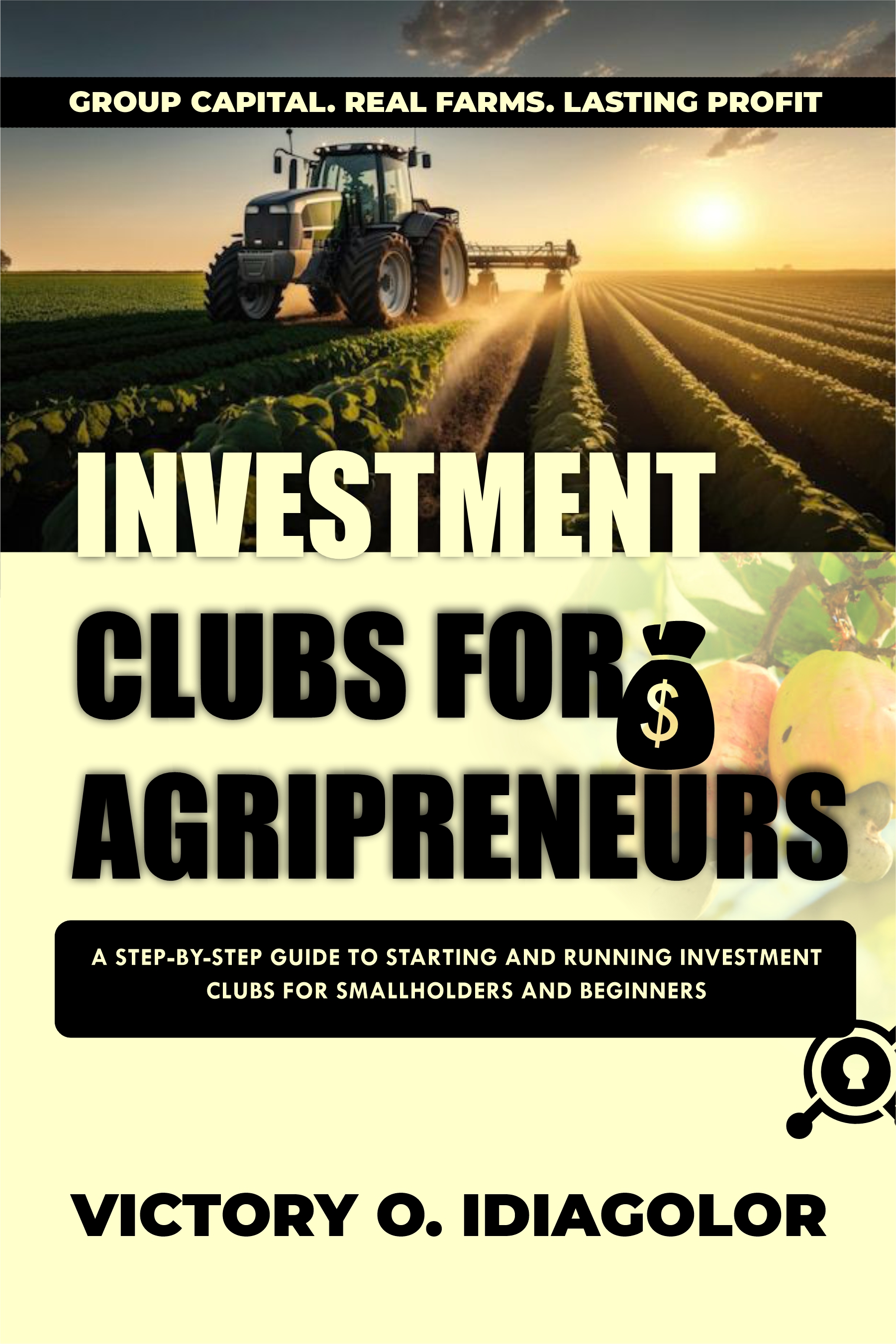
Begin your first step toward AgriCapitalism with the right knowledge and resources today

If this challenged your perspective, share this with someone who needs to read it. Let’s talk about the real strategies for building transgenerational wealth in Africa — not just theories.
