Self-Reliance Is the New Currency: How to Build a Life You Control
Have you ever paused to ask yourself:
What would my life look like if I stopped waiting for help?
Now stretch that question further: What if Nigerians stopped waiting altogether?
Throughout history, waiting has never served us.
We talk about self-reliance like it’s a moral lesson from primary school. But what if I told you it’s far more than that?
What if self-reliance is the single most underrated strategy for personal success and national transformation?
Here’s the reality most of us don’t like to admit:
It's not that Nigerian professionals earn too little to be self-reliant—it’s that we often glamorize our lifestyles to match our income, rather than use our income to build something lasting.
We upgrade apartments, buy the latest gadgets, go on Instagrammable trips, and label it “soft life”—yet we fail to invest in tools, skills, land, or ideas that would give us real control over our future.
Now, imagine what would happen if we flipped the script.
What if every salary you earned became seed capital?
And,
What if your income wasn’t just for consumption—but your launchpad to freedom?
So I ask again:
What would your life look like if you became self-reliant? What would Nigeria look like if millions of us did?
Rethinking Self-Reliance in a Dependent Economy
Let’s be honest—when we hear “self-reliance”, most of us think of a motivational buzzword, something pastors or parents say to guilt us into working harder.
But self-reliance is far deeper than that. It's a wealth blueprint, and a national transformation tool.
Now, consider Nigeria.
A nation with over 200 million people. 70 million hectares of arable land spread across every region. An energetic, young population with nothing stopping our zeal, will, and grit. Yet we crawl—chained not by lack, but by generations of ignorance, cycles of apathy, and a culture of total consumerism.
Why?
Because our systems—economic, political, and even educational—have conditioned us to depend rather than produce.
• We wait for government palliatives.
• We rely on foreign currency and foreign investments.
• We chase jobs, never asking who creates them.
• We rely on monthly salaries to survive, but never convert that income into something we truly control.
• We consume more than we build.
• We maintain lifestyles that impress the outside world but leave us hollow inside—disconnected from any form of production or ownership.
Here's where it gets worse:
We are now subconsciously nurturing the next generation with such ideas.
Self-reliance doesn’t mean quitting your job. It means using that job—and every opportunity it brings—as a tool to create something bigger than a paycheck.
It means intentionally converting your income, your weekends, your skills, and your network into ownership, influence, and financial independence.
Because,
No nation rises beyond the self-reliance of its people.
And no individual builds generational wealth by outsourcing their future.
Self-reliance is not rebellion. It’s responsibility. It is a mindset that says: I may not control everything—but I will control what I can, and I’ll build from there.
Land – Nigeria’s Most Ignored Goldmine
Let me ask you a question: If you had ₦500,000 today, what would you do with it?
Many will say: “Start a business.” Some might say: “Buy a car.” Others will say: “It’s not enough to do anything.”
But here’s an overlooked truth: Land is one of the most powerful, undervalued assets in Nigeria today—especially in the hands of those who think long-term.
We often hear “they’re not making more land,” yet many Nigerian professionals have never seriously considered land ownership—not for building a home, but for building wealth.
We think land is something to buy “later,” when we’ve arrived. But that thinking is flawed.
The truth? Strategic land acquisition is one of the earliest and safest steps toward self-reliance.
Across states like Delta, Edo, Ogun, and even less populated parts of Lagos, vast hectares of fertile land remain unused—while food prices skyrocket, and import dependency deepens.
Meanwhile, young professionals with stable incomes are too busy chasing digital trends and quick profits to recognize the generational wealth hiding beneath their feet.
Now consider this:
The same ₦500,000 spent on designer shoes or a vacation can buy a plot of arable land in developing outskirts.
That land, with just modest effort, can begin producing food, herbs, poultry, or other agricultural products.
With time, that production can evolve into value-add businesses: packaged goods, organic brands, and even exportable produce.
This is how wealth begins—quietly, humbly, and with the mindset to own something real.
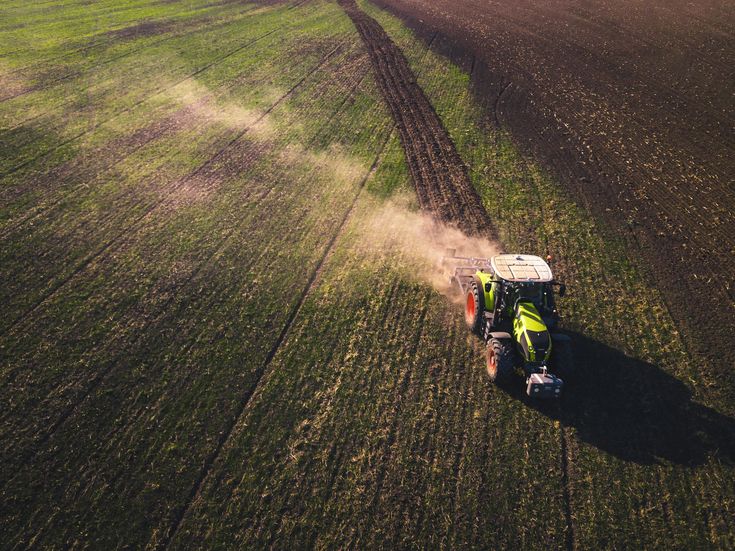
Self-reliance in Nigeria cannot happen without a return to the land.
And the Nigerian professional must stop seeing land ownership as the privilege of the rich. It is the starting line for anyone willing to build what truly lasts.
From Consumer to Creator – The Value-Addition Shift
Buying land is just the beginning. The real transformation happens when you move from owning land to doing something valuable with it. This is where self-reliance meets enterprise, and where many Nigerians stop short.
Let’s ask the hard question:
Why are we comfortable consuming what others create but reluctant to create what others consume?
We import tomatoes from countries with less sunlight than Nigeria. We ship out raw cocoa and import chocolate. We grow cassava but buy imported garri packaged in nylon from other regions.
It’s not a lack of resources—it’s a lack of vision.
Here’s something to remember: Consumption sustains you, but creation empowers you.
The wealth in farming isn’t just in growing maize or cassava—it’s in processing, packaging, branding, and distributing those goods. It’s in turning raw produce into finished, exportable products. This is what we call value addition—and it’s the bridge between survival and wealth.
Let's imagine this:
A young professional buys land and grows plantain.
Rather than sell it raw, she processes it into chips, flour, or frozen slices.
She brands it, sells it locally and eventually exports.
By doing so, she has now become a value chain player, not just a hustler.
She has moved from laborer to business owner—from consumer to creator.
And it all started because she didn’t just wait for a promotion at work—she reimagined her income as a tool for building something she owns.
This is the mindset shift Nigeria desperately needs.
If enough professionals began thinking this way—not just about farming, but in fashion, tech, manufacturing, and education—we wouldn’t just reduce dependency. We would redesign our economy from the ground up.
Case Studies
In Nigeria today, a growing number of individuals are rejecting the dependency mindset and building wealth through intentional, self-reliant ventures. These aren't billionaires or celebrities. They're ordinary professionals who saw their salaries and skills as tools — not trophies.
1. ColdHubs (Imo State)
A journalist by training, Nnaemeka saw how food wastage crippled farmers in rural areas. Rather than complain about government inefficiency, he created ColdHubs—solar-powered cold storage systems that allow smallholder farmers to preserve their produce longer and reduce spoilage.
Today, ColdHubs operates across multiple Nigerian states and supports thousands of farmers, proving that innovation tied to agriculture isn’t reserved for Silicon Valley.
2. LZ- Value Addition in the North
Started in Kano in 2008, L&Z works with more than 2,000 smallholder farmers, processing fresh milk into yoghurt, cheese, and traditional dairy drinks like fura da nono.
With ₦3 billion in revenue in 2022 (projected to ₦5 billion by 2025), this company exemplifies how local production and value addition create real impact .
3. Founder & CEO, ReelFruit (Cross River State)
A Nigerian agribusiness pioneer who began in her apartment with just $8,000. Today, ReelFruit processes and distributes locally grown fruit snacks, scaling from small beginnings to multiple branches and earning recognition like Forbes listings.
Her journey shows exactly how a professional—using initial savings and vision—can move from consuming to creating.
The Pattern?
• They started small, but started anyway.
• They used what they had—land, networks, knowledge, and income.
• They focused not just on production, but on ownership and value creation.
• They intentionally added value—processing, packaging, branding.
• And they transitioned from the hustler mindset to business ownership.
This isn't hypothetical. This is the blueprint of Nigerian self-reliance in action.
These are the faces of a new Nigeria—one where young people don’t just protest problems, they create systems.
And if they could do it without perfect conditions, what’s really stopping you?
The Path Forward – How You Can Start Today
Now that the vision is clear, most of us are left with the question:
Where do I start?
Because self-reliance isn’t just a mindset—it must translate into action.
You don’t need to have it all figured out. You just need to begin.
Here are five powerful steps to begin your journey toward a life you control:
1. Audit Your Income and Spending Habits
Ask yourself: What portion of my income goes into consumption vs creation?
The goal isn’t to stop living well—it’s to spend intentionally. Cut the glamorized expenses. Delay the upgrades. Begin to set aside capital, not just savings.
Your salary is more than survival—it’s your seed capital. Treat it that way.
2. Acquire Land (Start Small, But Smart)
Look beyond the cities. Begin exploring agricultural belts, upcoming development areas, or rural outskirts with strong community ties. Even half a plot in the right area can become a production space, a processing site, or a strategic long-term asset.
Land is the new leverage. Own some.
3. Learn Value-Addition Skills
Pick one area—farming, food processing, packaging, logistics, or branding—and learn the basics. You don’t have to be the technical expert. But the more you understand how raw resources become refined products, the more control you’ll gain in the value chain.
Knowledge is your competitive edge.
4. Build Partnerships, Not Excuses
You don’t need to do it alone. Find people who complement your strengths. A farmer needs a logistics person. A producer needs a marketer. A landowner needs a processor.
Leverage community—but with structure, trust, and shared vision.
Don’t wait for perfect; collaborate and grow.
5. Start with One Thing. Today.
Don’t wait until you earn millions. Don’t wait until government policies change.
Start where you are, with what you have. Buy that ebook. Make that call. Visit that land. Draft that plan.
Action is the bridge between vision and reality.
The Movement Begins with You
The Nigeria of our dreams won’t come from protests or political tweets alone. It will rise when individuals—you and I—take ownership: of our time, our income, our land, our creativity, and most importantly, our responsibility to build what we want to see.
Self-reliance is the new currency. And those who learn to mint it will never be poor.
This message isn’t new to those who’ve been following my journey.
From my book to my published articles, even my YouTube channel—it’s all been building up to this one truth:
The Nigerian professional must stop waiting and start building.
We are the ones we've been waiting for.
And the future we want won't come to us—we must create it.
So, my final question to you is simple:
What will you build—today, with what you already have?

Ready to turn your salary into long-term financial freedom?
Get the book: The 9-5 Endgame today!

If this challenged your perspective, share this with someone who needs to read it. Let’s talk about the real strategies for building transgenerational wealth in Africa — not just theories.